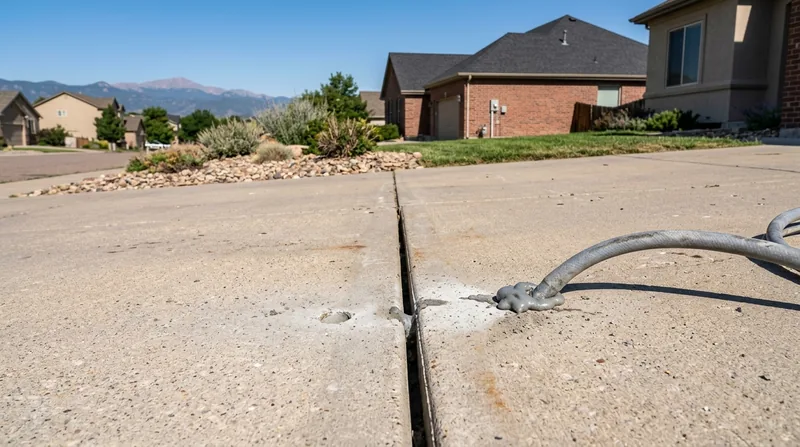




Sunken driveways, uneven patios, and trip hazards plague Denver homeowners, especially in areas where expansive clay soils and shifting ground destabilize concrete slabs over time. Concrete leveling and slab lifting in Denver is a fast, proven solution that raises settled concrete back to grade without the cost and disruption of full replacement. Denver Concrete has been lifting and leveling residential slabs since 2016, using ACI-certified methods that work on driveways, patios, walkways, and foundation slabs across Denver, Aurora, Lakewood, Thornton, and beyond. If your concrete has settled, cracked, or created a safety hazard, we can level it in a single day, often for a fraction of the cost of pouring new concrete.
Why Concrete Leveling and Slab Lifting Matters in Denver
Denver's expansive clay soils and variable moisture cycles cause concrete to settle unevenly, leaving homeowners with cracked surfaces, drainage problems, and trip hazards that invite liability and reduce property value. Slab lifting addresses the root cause, raising sunken concrete back to its original elevation so water drains properly, entryways align, and walkways are safe. Unlike full replacement, leveling preserves your existing concrete and avoids weeks of construction disruption.
- We raise sunken slabs using polyurethane foam injection, a method that fills voids beneath concrete and lifts it hydraulically without breaking or replacing it.
- The process takes hours, not days, and your driveway or patio is ready to use the same day in most cases.
- Leveling restores proper drainage, eliminating standing water that accelerates concrete deterioration and creates mosquito breeding grounds.
- Raised concrete eliminates trip hazards that can injure family members, guests, or delivery personnel and expose you to liability claims.
Addressing settled concrete quickly prevents secondary damage to foundation slabs, basement walls, and adjacent structures.
Key info: A driveway settled 2 to 3 inches in Lakewood or Highlands Ranch is a common call for us. Expansive clay below the surface swells and shrinks with moisture, causing slabs to drop unevenly. Leveling costs far less than demolition and replacement, and the results last when done right.
For detailed information on local permit requirements and best practices, visit the City and County of Denver's driveway and sidewalk permit guidelines.
How We Level and Lift Concrete in Denver: Our Process
Our leveling process begins with a thorough site inspection to identify the cause of settlement, measure the extent of drop, and determine the best lifting method for your specific slab and soil conditions. We use polyurethane foam injection as our primary technique because it is precise, fast, and minimally invasive. The foam expands beneath the concrete, filling voids and lifting the slab to grade in controlled increments. Once the slab is level, we seal injection ports and your concrete is ready to use.
- We conduct a free on-site inspection and use laser levels to measure the exact drop and identify settlement patterns across your slab.
- We drill small ports (typically 5/8 inch diameter) at strategic points beneath the concrete where settlement is greatest.
- We inject high-density polyurethane foam through each port; the foam expands and lifts the slab incrementally to the target elevation.
- We fill injection ports with concrete matching your existing slab color and finish, leaving no visible trace of the work.
- We perform a final laser check to confirm the slab is level and meets ADA compliance for walkways and entryways.
Most residential driveways and patios are leveled and ready to use within 4 to 6 hours.
Local example: A homeowner in Westminster had a patio that settled 3 inches near the house, creating a tripping hazard and pooling water. We lifted the entire 400-square-foot patio back to grade in one day using polyurethane foam. The cost was roughly one-third of demolition and replacement, and the patio has remained level for over two years.
For more information on related concrete repair options, see our concrete repair and resurfacing services.
Concrete Leveling and Slab Lifting Methods Compared
| Method | Description | Best For |
|---|---|---|
| Polyurethane Foam Injection | High-density foam injected beneath the slab fills voids and lifts concrete hydraulically to grade. Lightweight, durable, and minimally invasive. Small injection ports are sealed with concrete. | Residential driveways, patios, walkways, and foundation slabs in Denver and surrounding areas. Works on clay and sandy soils. |
| Mud Jacking (Slab Jacking) | A cement-based slurry is pumped beneath the slab to fill voids and raise it. Heavier and slower than foam, but cost-effective for larger commercial slabs. Ports are sealed after lifting. | Large commercial parking lots or warehouse floors where weight and durability are priorities. Less common for residential work in Denver. |
| Partial Replacement | The settled section of the slab is removed and replaced with new concrete. More labor-intensive and disruptive than lifting, but necessary if the slab is severely cracked or broken. | Slabs with extensive cracks, spalling, or structural damage that cannot be safely lifted. See our concrete removal and replacement service for details. |
| Full Slab Replacement | The entire concrete slab is demolished, the soil is stabilized or amended, and new concrete is poured to grade. Most expensive and time-intensive option, but gives you a completely new surface with a 20-year warranty. | Severely deteriorated slabs, multiple settlement episodes, or homeowners who want a fresh start with new finish options like stamped or polished concrete. |
Concrete Leveling and Slab Lifting Cost in Denver: What to Expect
Concrete leveling and slab lifting in Denver typically starts at $4 per square foot for polyurethane foam injection on standard residential driveways and patios. A 400-square-foot patio would cost roughly $1,600 to $2,000, depending on how much the slab has settled, soil conditions beneath it, and accessibility for our equipment. Mud jacking runs slightly less per square foot but is used less often for residential work in Denver.
Several factors influence the final cost. Depth and extent of settlement determine how much foam or slurry is needed and how many injection ports we drill. Soil type matters too, expansive clay requires more careful lifting than stable sand or gravel. Slab size and shape affect drilling patterns and labor time. Access to the site, including gate width, driveway slope, and proximity to structures, can add time or require specialized equipment. Existing damage such as cracks or spalling may need repair before or after lifting, adding to the scope.
We always recommend getting two or three estimates from licensed contractors so you can compare methods, timelines, and pricing. Our free estimate includes a laser survey, a detailed scope of work, and a firm price with no hidden charges. Call us at (720) 575-1321 for a same-day or next-day appointment.
For a comprehensive pricing overview and examples of common jobs, visit our full pricing page.
Concrete Leveling and Slab Lifting Near Me: What Denver Homeowners Should Know When Hiring
Choosing the right contractor for concrete leveling is as important as the method itself. A poorly executed lift can fail within months if the underlying soil is not addressed or if the wrong foam or slurry is used. Before you hire, verify that your contractor is licensed, insured, and experienced with Denver's specific soil and climate conditions.
Start by confirming licensing and insurance. Colorado requires concrete contractors to be licensed by the state, and Denver may require local business licenses for certain work. Ask for proof of general liability insurance, workers' compensation, and bonding. An insured contractor protects you from liability if someone is injured or property is damaged during the job.
Request references from recent jobs in your neighborhood. Ask how long the lifted slabs have remained level and whether the contractor offers a warranty. ACI certification, like Denver Concrete carries, shows that the contractor has passed rigorous technical exams and stays current on industry standards.
Understand permit requirements for your specific job. Some Denver neighborhoods or HOAs may require permits for concrete work, especially if the leveling is part of a larger driveway or patio project. Your contractor should clarify permit responsibility upfront.
Get everything in writing: the scope of work, the method used, the timeline, the total cost, and any warranty or guarantee. A clear contract protects both you and the contractor and prevents misunderstandings.
Ready to schedule your free estimate? Contact Denver Concrete today or call (720) 575-1321. We serve Denver, Aurora, Lakewood, Thornton, Arvada, and all surrounding areas with same-day or next-day appointments.
Concrete Leveling & Slab Lifting in Denver: Pricing Guide
| Service | Price | Details |
|---|---|---|
| Polyurethane Foam Leveling | From $4/sq ft | Residential driveways and patios, includes inspection, lifting, and port sealing, adjusted for soil type and settlement depth |
| Mud Jacking (Slab Jacking) | From $3.50/sq ft | Larger commercial slabs, heavier and more durable than foam, ideal for warehouse floors and parking lots |
| Partial Slab Replacement | On estimate | Severely cracked or damaged sections removed and replaced, cost depends on damage extent and new concrete finish type |
| Full Slab Replacement | On estimate | Complete demolition and new pour, includes soil stabilization and optional finishes like stamped or polished concrete |
| Free Estimate and Inspection | Free | Same-day or next-day laser survey and written quote, no obligation to book, response within 24 hours at (720) 575-1321 |
Indicative pricing, the exact cost depends on square footage, finish, and site access. Free personalized estimate within 24h at (720) 575-1321.


