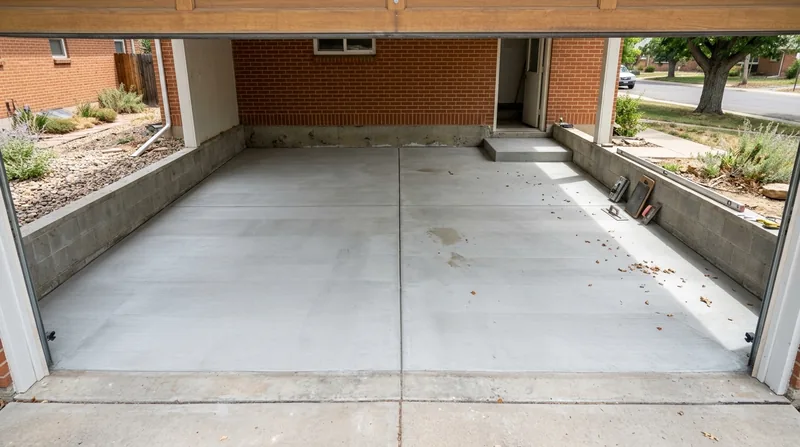




A garage floor in Denver takes a beating. Winter freeze-thaw cycles, road salt tracked in on tires, oil drips from vehicles, and the weight of daily use all demand a concrete surface built to last. Denver's expansive clay soils and seasonal moisture swings mean that a poorly installed or sealed garage slab will crack, settle unevenly, and stain within a few years. Denver Concrete installs level, crack-resistant garage floor slabs that handle the Colorado climate, heavy vehicles, and years of hard use without breaking down. Whether you're building new, replacing a failing slab, or adding a garage addition, we pour, finish, and seal your floor to resist oil, moisture, and freeze-thaw damage. ACI Certified since 2016, we've installed hundreds of residential and commercial garage floors across Denver, Aurora, Lakewood, Thornton, and the surrounding metro. Call (720) 575-1321 for a free estimate, or read on to learn why garage floor installation matters in Denver and how we do the work right.
Why Garage Floors Matter in Denver's Climate and Soil Conditions
Denver sits on expansive clay soils that shift with moisture and temperature. In winter, freeze-thaw cycles crack concrete that isn't sealed properly. In summer, hot, dry spells accelerate evaporation and can cause uneven curing. A garage floor that isn't installed with attention to these local conditions will develop surface spalling, edge cracking, and settlement within the first few years. The right slab design, proper base preparation, and quality sealing keep your floor level and intact for decades.
- We compact and grade the subbase to account for Denver's clay soils and prevent settlement under vehicle weight.
- We pour concrete with air entrainment and proper water-to-cement ratio to resist freeze-thaw damage common in Colorado winters.
- We seal all finished floors with a penetrating or topical sealer to block oil stains, moisture penetration, and UV degradation.
- We finish the slab smooth for easy sweeping and vehicle movement, or broom-textured for slip resistance.
A properly installed garage floor eliminates costly repairs, protects your vehicles and stored items from moisture, and adds resale value to your home.
Local insight: Denver homeowners in areas like Cherry Creek, Cap Hill, and Highlands Ranch often discover that old garage slabs have settled 1 to 2 inches at the edges due to expansive soil movement. A new slab installed with proper grading and drainage prevents this costly problem from the start.
For more details on how concrete responds to Denver's soil and climate, see our guide to concrete leveling and slab lifting, which addresses settlement and uneven surfaces.
For permitting questions specific to Denver garages, consult the City of Denver Building and Safety Services to understand when a permit is required for new or replacement garage slabs.
How We Install Garage Floors in Denver: Our Process
We follow a proven five-step process that ensures a level, durable, and sealed garage floor. From site assessment to final sealing, every step is tailored to Denver's soil, climate, and building code requirements. Our crew works methodically to minimize disruption to your home and deliver a floor you can use immediately after curing.
- We excavate and remove any old concrete, then inspect the subgrade and grade beams to confirm proper drainage away from the foundation.
- We compact and level the base course, adding gravel or recycled asphalt as needed to meet Denver building standards and prevent moisture wicking.
- We install concrete forms, rebar or wire mesh reinforcement, and vapor barriers to control cracking and moisture intrusion.
- We pour 4-inch concrete with proper slope for drainage, then finish the surface with a smooth trowel or broom texture per your preference.
- We cure the slab for 7 to 14 days, then apply a penetrating sealer or topical coating to resist oil, salt, and freeze-thaw damage.
The entire process typically takes 2 to 3 weeks from demolition to a fully cured, sealed floor ready for vehicles and storage.
Real example: A 400-square-foot garage floor replacement in Lakewood took 10 days of on-site work (excavation, prep, pour, finish, sealing) plus 7 days curing. The homeowner drove in a car on day 12 and had no issues with the surface for years afterward.
If your garage is part of a larger project, such as a new driveway or patio, we coordinate the work to save time and cost. Learn more about our concrete driveway installation services to see how we handle connected projects.
Garage Floor Installation Methods and Finishes
| Method or Finish | Description | Best For |
|---|---|---|
| Standard Trowel Finish | Smooth, dense surface achieved by hand or power trowel during finishing. Sealed with penetrating or topical coating. | Residential garages, storage areas, workshops where easy cleaning and a finished appearance matter. |
| Broom Finish | Light texture applied with a broom before the concrete sets. Provides slip resistance without aggressive roughness. | Garages in areas with snow or ice, or where vehicle traction is a concern in winter conditions. |
| Polished Concrete | Multi-step grinding and polishing to achieve a glossy, show-quality finish. Sealer applied to protect the surface. | High-end residential garages, showcase spaces, or homeowners who want a premium aesthetic and easy maintenance. |
| Epoxy or Polyurethane Coating | Industrial-grade topical coating applied over cured concrete. Highly resistant to oil, chemicals, and staining. | Garages with heavy use, mechanic spaces, or homeowners in Denver who want maximum durability and easy cleanup. |
Each method and finish is sealed to resist Denver's winter salt, summer UV, and year-round moisture. We recommend discussing your garage's use and aesthetic goals with our team before deciding on a finish.
Garage Floors Cost in Denver: What to Expect
Most residential garage floors in Denver start at $5 per square foot for a standard 4-inch slab with basic trowel finish and penetrating sealer. A typical 400-square-foot garage runs $2,000 to $2,400 for a complete installation. Larger slabs, polished finishes, or epoxy coatings will increase the cost per square foot. Factors like site access, old concrete removal, soil conditions, and local permit requirements can also affect the final price.
- Standard trowel finish with penetrating sealer costs $5 to $7 per square foot and is the most popular choice for Denver homeowners.
- Broom finish or textured surfaces run $6 to $8 per square foot due to extra finishing labor.
- Polished concrete or epoxy topcoats add $3 to $5 per square foot on top of the base slab cost.
- Old slab removal and hauling add $1 to $2 per square foot depending on concrete thickness and site access.
- Sloped or complex grading for drainage can increase labor costs by 10 to 20 percent.
The best way to get an accurate price is to request a free on-site estimate. We measure the space, assess the soil and drainage, and provide a detailed quote within 24 hours. Visit our pricing page for more details on how we structure quotes, or call (720) 575-1321 to schedule a walk-through at your home.
We always recommend getting 2 to 3 estimates from licensed contractors before committing. Comparing detailed quotes helps you understand what's included and why prices differ. The cheapest option is rarely the best value if it skips proper base prep or sealing.
Hiring a Garage Floor Contractor Near Denver: What to Look For
Choosing the right contractor for your garage floor is as important as choosing the right concrete mix. A poorly installed slab will crack, settle, and stain within a few years, wasting your investment. When evaluating contractors near Denver or in your specific neighborhood, prioritize licensing, insurance, experience with local soil conditions, and a willingness to explain their process and warranty.
- Verify that the contractor holds a Colorado state contractor license and carries general liability and workers' compensation insurance.
- Ask for references from recent garage floor projects in Denver, Aurora, or Lakewood, and contact at least two to confirm quality and timeliness.
- Confirm that the contractor understands Denver's expansive soils, freeze-thaw cycles, and local building code requirements for garage slabs.
- Request a detailed written estimate that itemizes excavation, base prep, concrete, finishing, sealing, and any permit or disposal fees.
- Ask about the concrete mix design, air entrainment, and sealer type to ensure they match Colorado climate standards.
- Check whether the contractor offers a warranty on the slab and sealer, and what it covers (cracking, settlement, staining).
A professional contractor will be transparent about timelines, costs, and potential challenges specific to your site. They will not pressure you to decide on the spot and will welcome your questions about materials and methods.
Ready to move forward? Contact Denver Concrete for a free estimate. We'll assess your garage, explain our process, and provide a firm price with no obligation. Call (720) 575-1321 or fill out our online form, and we'll reach out within 24 hours.
Garage Floors in Denver: Pricing Guide
| Service | Price | Details |
|---|---|---|
| Standard Garage Floor (Trowel Finish) | Starting at $5/sq ft | 4-inch slab with base prep, trowel finish, penetrating sealer, and drainage slope included |
| Textured or Broom Finish | Starting at $6/sq ft | Standard slab with added broom texture for slip resistance, ideal for Denver winter conditions and vehicle traction |
| Polished Concrete or Epoxy Coating | Starting at $8/sq ft | Premium finish with multi-step grinding, polishing, or industrial epoxy topcoat for durability and aesthetics |
| Old Slab Removal and Haul-Away | Starting at $1/sq ft | Excavation, demolition, and disposal of existing concrete included in most replacement projects |
| Free Estimate | No cost | On-site measurement, soil assessment, and detailed written quote provided within 24 hours at (720) 575-1321 |
Indicative pricing, the exact cost depends on square footage, finish, and site access. Free personalized estimate within 24h at (720) 575-1321.


